Spring Rain, Hydrostatic Pressure and Foundation Questions in Cobb County
Need help with your own home?
Tell us your concern. We'll check local contractor availability.
No referral fee · No obligation to hire
What is hydrostatic pressure and why does it matter for my foundation?
Hydrostatic pressure is pressure exerted by water in or against soil and structures. Whether it affects a foundation depends on drainage, grade, groundwater, wall condition, foundation type, and site history. A regional rain or soil description is context, not a diagnosis.
Water has weight, and saturated soil can exert lateral pressure on a wall. The amount depends on soil, drainage, water path, wall geometry, and groundwater. Do not infer a force or repair from a regional soil label alone.
Mapped soil and rainfall provide regional context, but water pressure depends on drainage, grade, wall condition, groundwater, and foundation type. A contractor should trace the water path and document any wall movement.
The assessment guide explains questions about investigation, access, fees and findings. A visit does not guarantee that pressure or a repair method will be determined.
How can seasonal rain change foundation observations?
Rain may reveal water entry or drainage concerns, but timing alone does not identify a cause or danger level. Record conditions after storms without entering unsafe areas, and seek appropriate advice for water entry, displacement or wall changes.
Groundwater and drainage conditions vary by property. A road, creek or seasonal label does not establish a rising water table or predict seepage; ask what local observations support the proposed explanation.
Dry-season observations may differ from wet-season observations, but a seasonal pattern does not prove swelling, shrinking, or fatigue. Record water entry, cracks, drainage, and movement over time.
If a basement stays dry in one season and wet in another, consider drainage, grade, groundwater, plumbing, wall condition, and water path. See wet basement after heavy rain for observation questions.
What are the signs of hydrostatic pressure damage I should look for after a spring rain?
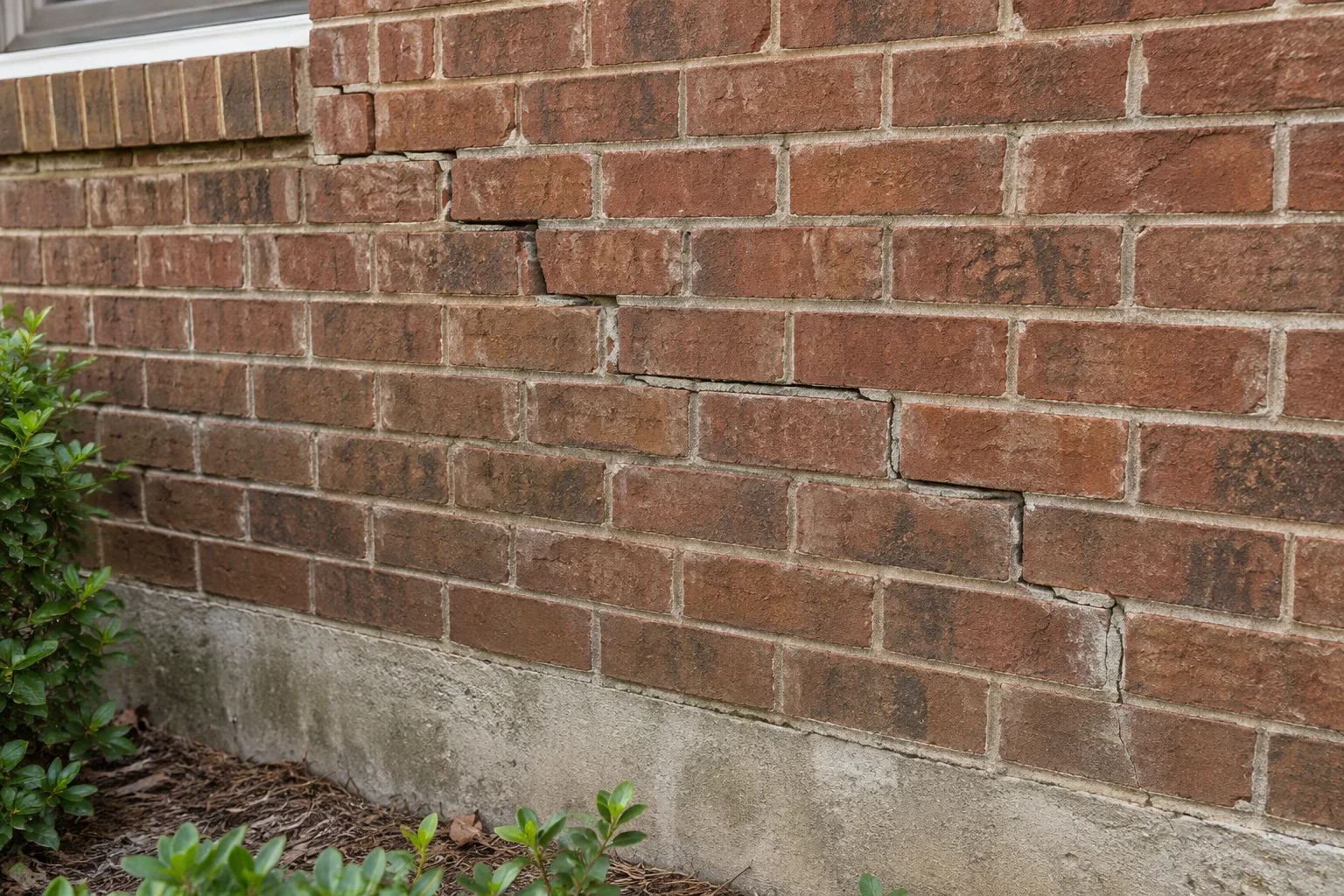
After rain, look for water entry, efflorescence, musty odor, crack changes, displacement, or wall bowing. These observations may warrant prompt review, but none alone identifies hydrostatic pressure or a repair.
Observations worth documenting after rain include the following; none identifies the cause alone:
Efflorescence can indicate prior moisture movement but is not structural damage by itself. Horizontal cracks, displacement, or bowing deserve closer review because the wall and water conditions need to be assessed together.
A visibly bowing wall or displacement deserves prompt qualified review. See bowing foundation walls for documentation questions; no universal fraction of an inch determines a repair.
- Water seeping at the cove joint (base of wall, where wall meets floor slab)
- Efflorescence (white chalky deposits) on block or poured-concrete walls
- Musty or earthy odor in the basement or crawlspace — even without visible water
- Horizontal cracks running along mortar joints in a block wall
- Inward bowing or bulging of a basement wall
- Changes in doors or windows above the affected area, without assuming a structural cause
How do gutters, downspouts, and yard grading make hydrostatic pressure worse?
Gutters, downspouts, grading, and drainage can affect where runoff accumulates, but the relevant correction depends on the lot and discharge rules. Maintain systems appropriately and ask for site-specific advice before changing grade or drainage.
Overflowing gutters or discharge near a wall may increase local moisture, but the effect depends on grade, soil, drainage, and foundation details. Observe where water travels and ask a professional to connect any recommendation to evidence.
Downspout extensions and grading should fit the lot, easements, discharge location, and local requirements. Do not treat a distance or slope as a universal prescription; confirm site conditions before excavation or regrading.
Drainage corrections may help where runoff is documented, but they do not replace evaluation of a damaged wall or other water path. If available, an assessment can review evidence; confirm fee and scope directly through the on-site inspection guide.
What does basement waterproofing cost and how does it relieve hydrostatic pressure?
Interior drainage, exterior waterproofing, sump systems, crack repair, or another approach may fit different water paths. Published ranges are rough budgeting context only; ask for measured scope, discharge plan, alternatives, and written terms.
An interior drainage system may intercept water at a cove joint or perimeter, but the proposed layout depends on the entry path, slab, discharge, and site. See basement waterproofing for questions.
Exterior excavation and membranes may address a different part of the water path but can involve access, grade, and scope constraints. Published ranges are rough budgeting context, not verified Cobb County price data or a contractor quote.
See the basement waterproofing page for a full breakdown of interior versus exterior systems, or use the foundation cost estimator to get a rough budget range before your inspection.
When does a leaking foundation crack need polyurethane injection?
Polyurethane or epoxy may be discussed for some leaking cracks, but material choice depends on crack condition, moisture, movement, wall type, and desired function. Injection does not automatically address wall movement or every water path. See <a href="/foundation-crack-repair">foundation crack repair</a>.
Some polyurethane systems are used for suitable leaking cracks, but expansion, flexibility, moisture compatibility and installation requirements depend on the product and condition. Ask why the specified system fits and what it does not address.
Epoxy products also have different moisture and structural-use requirements. Ask for the manufacturer's instructions and any design basis rather than assuming that every epoxy restores capacity or cannot be used in damp conditions. See the crack-repair guide for questions.
Wall movement and leak sealing are separate concerns. A horizontal crack does not itself diagnose lateral pressure or select reinforcement; seek appropriate structural assessment when indicated.
If spring pressure is pushing my basement wall inward, what are the repair options?
A contractor may discuss carbon-fiber straps, anchors, drainage, replacement, or another method when measurements show a wall concern. The method, quantity, and price depend on wall type, deflection, water path, access, and written design. Published ranges are rough budgeting context, not a quote.
Carbon-fiber straps may be considered for some measured wall conditions, while anchors or other work may fit others. Ask for deflection measurements, design basis, alternatives, limitations, and any warranty terms directly.
Wall anchors and other systems have different access and scope requirements. Drainage may be relevant where water entry or runoff is documented, but no system is always required. Request a written explanation.
Review wall-repair questions and horizontal cracks. Ask which design, product instructions and current local requirements apply to the proposed work.
How does this service work and what does the inspection cost?
Marietta Foundation Repair is a disclosed referral service operated by Stratum Relay LLC, not a contractor. If a suitable contractor is available, we may introduce you; availability and credentials are not guaranteed. Verify identity, license, insurance, assessment fee, scope, schedule, price, and warranty directly. The referral request has no fee from this service; contractor compensation, if any, is governed by the referral agreement.
We do not promise or independently verify contractor credentials. If an introduction is arranged, request license, insurance, assessment fee, scope, and schedule directly from the contractor.
An introduction is not a promise of an inspection, timing, or repair, and there is no fee to submit a referral request. You contract directly under the contractor’s terms if you choose to proceed.
To get started, call (678) 329-9460 or visit the foundation inspection page. We may check availability for listed communities, but coverage and timing are not guaranteed.
Frequently asked questions
Can hydrostatic pressure damage a crawlspace as well as a basement?
Crawlspace walls can experience water entry or pressure, but the same label does not establish the cause or method. Document seepage, efflorescence, cracks, drainage, and wall movement, then seek qualified review.
My basement only leaks in spring. Does that mean the problem is minor?
Seasonal seepage may reflect drainage, grade, groundwater, plumbing, wall condition, or another path. It does not confirm hydrostatic pressure or indicate severity by itself. Document conditions and ask for an assessment if it persists or worsens.
Will fixing my gutters and grading be enough, or do I need waterproofing too?
Drainage correction may help when runoff or grading contributes, but it does not guarantee that seepage or wall movement will stop. Ask what water path was observed and what limitations apply.
Does homeowner's insurance cover hydrostatic pressure damage?
Insurance coverage depends on the policy, event, exclusions, and documented cause. Ask your carrier about surface water, groundwater, flood, and foundation movement provisions; this site does not determine coverage.
How long does a polyurethane crack injection last?
Service life depends on the product, crack condition, preparation, installation and later changes. Ask for the actual warranty and limitations; this guide does not promise a lifespan or that new leaks cannot develop.
Who actually performs the inspection and repairs — is it your company?
No. This service is not a contractor and performs no physical work. If a suitable contractor is available, an introduction may be arranged; verify credentials, fee, scope, schedule, and warranty directly. The referral request has no fee from this service.