Helical Pier Installation for Settling Foundations in Marietta, GA
Take the next step for your home
Tell us your concern. We'll check local contractor availability.
No referral fee · No obligation to hire
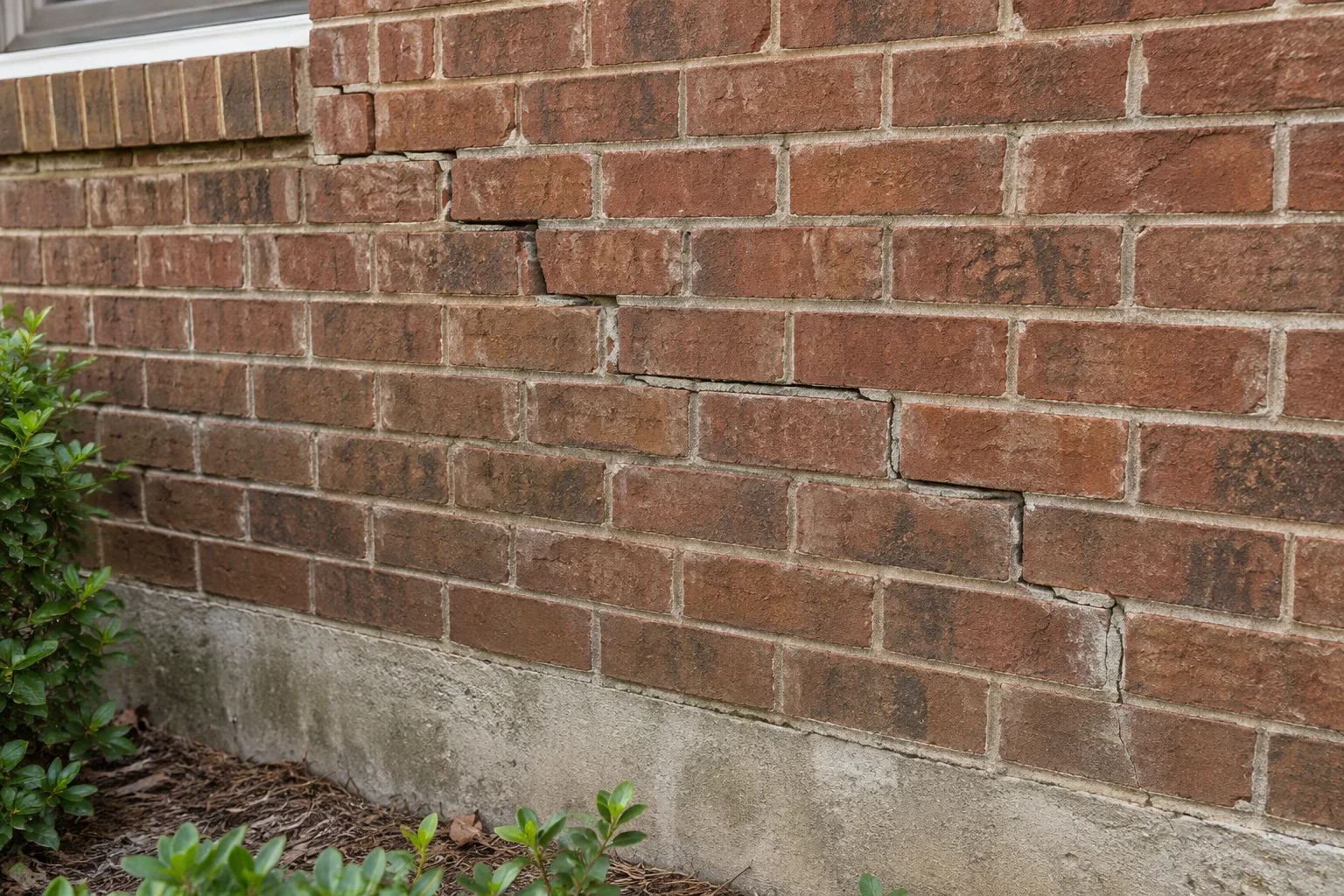
How do helical piers work when a designed scope calls for them?
Helical piers are steel shafts with helix plates that a crew advances by rotary torque to a specified installation criterion. After the shaft reaches the design criterion, the crew prepares the footing, installs the bracket or load-transfer assembly, and transfers supported load as designed. The proposed system and any lift target depend on site measurements and engineering.
A helical pier works like a large screw. If deep support is appropriate, a contractor rotates the shaft into the ground while recording installation torque or another specified criterion. The shaft is not hydraulically pushed like a resistance pier.
After the shaft reaches the specified criterion, the crew excavates or prepares access at the footing, installs the steel bracket, and transfers load according to the design. A pier system may stabilize movement, but performance and any lift depend on footing condition, load path, bearing conditions, installation records, and the written scope. Unlike crack injection, deep support addresses a different observed condition.
Push piers (resistance piers) are driven axially using the structure or another reaction frame, rather than rotated. Neither method is selected from a neighborhood label alone; the contractor should explain the evidence, alternatives, design criterion, quantity, and limitations.
When might helical piers be considered for a Cobb County home?
Marietta and Cobb County include varied soil, fill, drainage, and foundation conditions. Moisture changes can contribute to movement on some lots, but a soil map or crack pattern cannot establish a pier need. Piers may be considered when measurements show a footing has lost support at depth and other options are not sufficient.
Moisture, drainage, fill, roots, foundation type, and construction history can all affect settlement. The USDA Official Series Description for Cecil classifies mapped Cecil soils as low shrink-swell. That regional map is not a diagnosis; fill, drainage, grading, foundation type, and settlement history vary by lot. A contractor should measure elevations, inspect the footing, and explain why deep support is or is not appropriate for this property.
When measurements show a deeper loss of bearing, helical piers can transfer load to a more competent layer below the affected zone. If movement is shallow or the concern is water, a contractor may recommend drainage correction, monitoring, crack repair, slab leveling, or another approach instead.
A pier recommendation should identify the observed movement, proposed count and locations, expected lift or stabilization target, alternatives, and limitations. Confirm the contractor assessment fee, scope, and availability directly before scheduling.
How might a provider compare helical piers with other options?
Cracks, uneven floors or sticking doors do not select a repair method. Helical piers may be considered for a supported deep-foundation design; drainage, crack treatment, framing work or monitoring may address different conditions. Ask what measurements and site evidence support the recommendation.
Helical underpinning can transfer load to deeper support where a qualified design calls for it. Before accepting that scope, ask what moved, what investigation was performed, what load and soil assumptions apply, and whether alternatives were considered.
Seepage may prompt investigation of water paths and drainage, while a crack may prompt questions about injection or other treatment. Neither appearance nor a lower price proves which method is suitable. Confirm the assessment scope and any engineering requirements directly.
Because method and cost depend on the actual footing and measured movement, an on-site evaluation is the responsible next step. The contractor may measure elevations, inspect the footing, review drainage, and explain whether piers or another approach fits. Confirm any assessment fee, scope, and availability directly.
How much do helical piers cost in Cobb County?
Published figures such as roughly $1,200-$3,000 per helical or push pier are rough budgeting context, not verified Cobb County price data or a quote. A pier count cannot be inferred from a symptom, ZIP code, or home type; final pricing depends on the investigated condition, designed locations and quantities, access, installation criteria, and written scope. Confirm assessment fees and terms directly.
Step one is the assessment: if an introduction is available, a contractor may map floor elevations, examine the footing and cracks, review drainage and access, and explain whether deep support is appropriate. Confirm any assessment fee, scope, and schedule directly.
On install day, the crew excavates access pits as needed, advances each helical shaft by rotary torque to the specified criterion, then prepares the footing and installs the steel bracket or other load-transfer assembly. Push piers follow a different driven installation method. Any jacking or lift is conditional on the design and structure.
Material selection, installation records, backfill, and completion timing depend on the property and written scope. Do not treat generalized corrosion, duration, or lift statements as guarantees. Related drainage corrections may be considered separately when site evidence supports them.
What is the helical pier installation process the contractor follows?
For an engineered helical underpinning scope, the installer prepares access, rotates the helical shaft into the ground to the specified installation criteria, then installs the footing bracket and transfers load according to the repair plan. Methods and sequencing depend on the designed system; confirm assessment and installation terms directly.
An assessment may examine elevations, cracks, footings, drainage and access to determine whether deep support is appropriate. Ask who prepares the repair design, what evidence supports it, and what the assessment includes and costs. A referral does not guarantee an engineering report or installation proposal.
In the CHANCE manufacturer's residential underpinning example, access holes are excavated, the lead shaft and extensions are advanced by a rotary machine to the required depth and torque, and then the bracket is installed and load transferred. Any stabilization or lift follows the repair plan. This is not the axial hydraulic driving used for push piers, and the example is not a promise that a referred contractor uses that system.
Service life depends on the product, exposure, design and installation. Ask what installation records, corrosion protection, backfilling and surface restoration are included. Any drainage work needs its own supported scope.
Are helical piers a permanent fix, and do they come with a warranty?
A properly designed and installed pier system can provide long-term support when the proposed bearing conditions, load path, installation records, and warranty are appropriate. It does not guarantee that every part of a home will remain unchanged. Review the written scope, monitoring terms, and warranty directly with the contractor.
Galvanized steel piers are selected for their load capacity and corrosion protection, but performance depends on the system, installation, site conditions, and warranty. Ask what bearing evidence was recorded, what movement the system is intended to address, and what remains outside the scope.
Warranty terms are set by the contractor and manufacturer, not by Marietta Foundation Repair. Ask for bearing evidence, installation records, movement limits, exclusions, transfer rules, and who performs warranty work. Do not assume a warranty, track record, or outcome before reviewing the written terms.
This referral service does not vet or guarantee a particular contractor. If an introduction is available, verify the contractor’s identity, current license, insurance, scope, and references directly before authorizing work.
Which Cobb County areas does Marietta Foundation Repair cover for pier work?
Marietta, East Cobb, Smyrna, Kennesaw, Acworth, and Powder Springs have varied housing stock and site conditions. A local contractor may assess slab, basement, crawlspace, or post-tension construction differently, so the foundation type and measured movement should guide any pier discussion.
A post-WWII slab-on-grade ranch, a basement-and-crawlspace subdivision home, and a newer post-tension slab present different access and safety questions. Piers are not predetermined by neighborhood or soil color. The contractor should identify the foundation type, locate utilities and tendons where relevant, and explain the method.
Soil and site conditions vary across the service area. Findings, method, quantity, access, and price remain property-specific; ask the provider what was measured and what assumptions the proposal uses.
Not sure which questions to ask? Start with the foundation repair overview or review crack-treatment questions, then request an introduction if available. A symptom alone does not select a treatment, and a referral request does not book a visit.
Frequently asked questions
What affects helical pier service life?
Service life depends on product, design, installation, exposure, loads, maintenance, and written warranty terms. Ask for the applicable specifications and records; a soil label or regional promise cannot establish a universal lifespan.
What's the difference between helical piers and push piers?
Helical piers are advanced by rotary torque; push piers are driven axially using structural reaction force. The suitable method depends on the foundation, measured movement, access, design, and installation criterion. Confirm the proposed method and limitations directly with the contractor.
How many helical piers will my Cobb County home need?
A pier count cannot be determined from a ZIP code or symptom list. A supported design considers loads, foundation geometry, investigation and installation criteria. Ask whether a contractor offers a proposal, who prepares any engineering, what is included and what it costs; an introduction or assessment does not guarantee an engineered count or price.
Do I really need piers, or will crack injection fix my foundation?
It depends on the evidence. A stair-step crack or sloping floor can warrant assessment, but symptoms alone do not establish a pier need. Ask for measurements, drainage and fill review, alternatives, and the reason for each proposed support point.
Does the on-site inspection obligate me to install piers?
No. An inspection, if available, does not commit you to installing piers. Confirm who will attend, the assessment fee, the written scope, and any estimate terms directly, then decide whether to proceed.
Will helical piers lift my house back to level?
A helical system may stabilize or support a structure, and a lift may be proposed where structurally appropriate, but neither is automatic. The contractor should set a realistic target from measurements and explain what will remain outside the scope.