Bowing & Leaning Foundation Wall Repair in Marietta, GA
Take the next step for your home
Tell us your concern. We'll check local contractor availability.
No referral fee · No obligation to hire
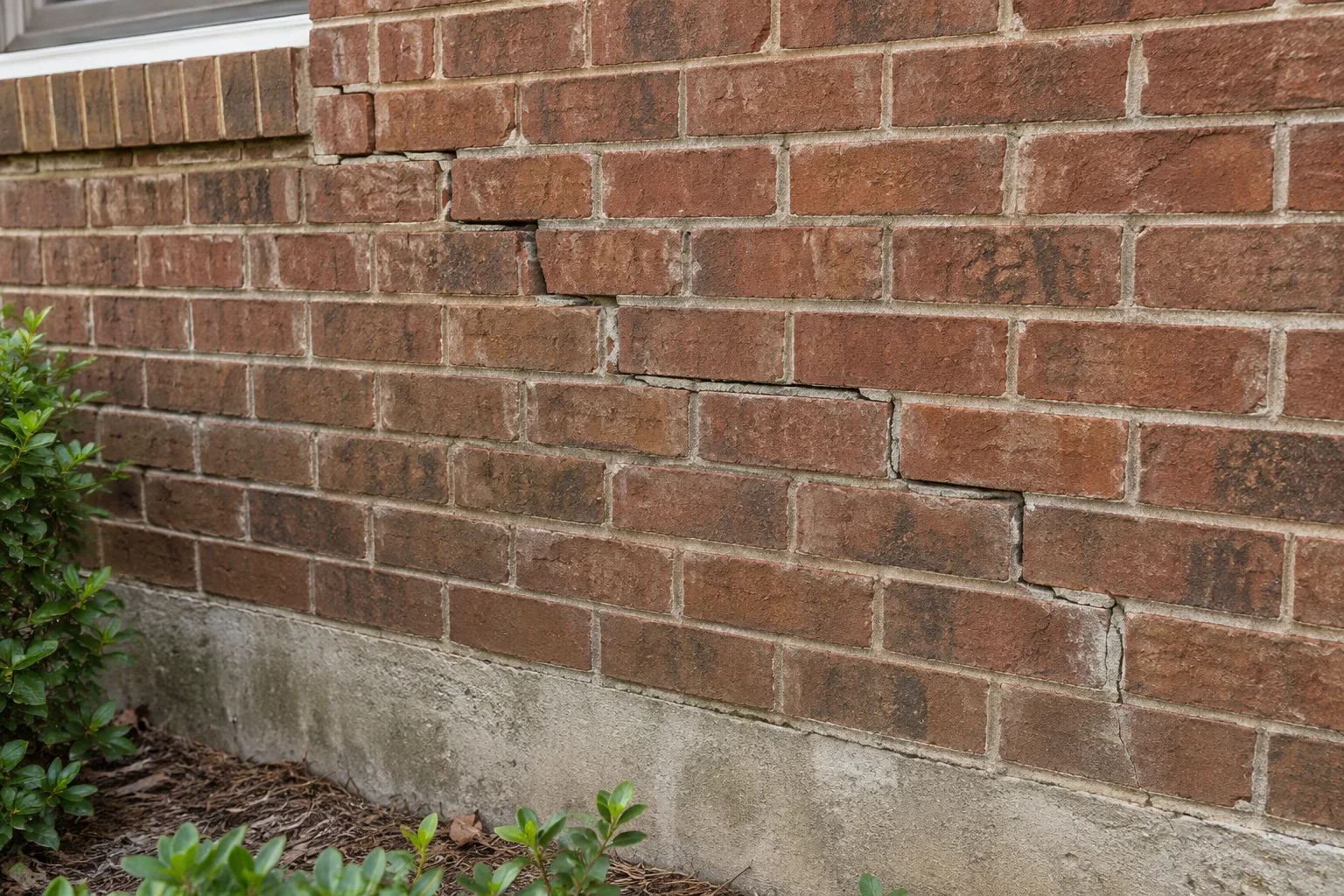
How should I approach a bowing or leaning foundation wall in Marietta, GA?
A bowing or leaning basement wall warrants prompt attention, but urgency and method depend on measured deflection, wall type, drainage, water, and site evidence. Marietta Foundation Repair is a referral service, not a contractor. If a suitable contractor is available, confirm credentials, assessment fee, scope, and schedule directly.
Marietta Foundation Repair is a disclosed referral service, not a contractor. We do not perform work. We may check whether a suitable contractor is available for homeowners across Marietta, East Cobb, Smyrna, Kennesaw, Acworth, and Powder Springs; verify that contractor’s identity, credentials, assessment terms, and proposed reinforcement directly.
A bowing wall should be documented and assessed promptly. If an introduction is available, a contractor may measure inward deflection, review horizontal cracking, and examine soil and drainage; ask what was measured and why a proposed reinforcement fits. An assessment is not guaranteed by this referral service.
Bowing can involve lateral pressure, wall construction, drainage, saturated backfill, or another condition; it is not diagnosed from a photograph. If an assessment also finds footing movement, the contractor may discuss related support such as helical piers, but the methods and scope should be justified separately.
Why do foundation and basement walls bow inward in Cobb County?
A wall may bow or lean when lateral loads, wall condition, drainage, backfill, construction, or another site factor create stresses that the existing system cannot accommodate. Those possibilities require measurement and site review; do not infer a cause, progression, or method from a photograph, soil label, or rainfall story.
Outside lateral pressure can involve saturated backfill, poor drainage, expansive or variable soil, grading, and wall condition. The USDA Cecil description is regional context rather than a site diagnosis. Ask what the contractor measured, whether water is contributing, and which alternatives fit the wall.
Water pressure may be relevant where drainage and site conditions permit water to accumulate against a below-grade wall. Rainfall totals or house age alone do not establish the pressure, cause of bowing or appropriate repair.
Ask how drainage, grading, vegetation and wall construction were evaluated. Water-management measures and structural work serve different purposes; neither should be prescribed solely from a regional soil story.
What are the warning signs of a bowing or failing foundation wall?
Horizontal cracking, bowing, leaning, shearing or other displacement can warrant prompt assessment. These observations do not establish a cause or remaining capacity. Keep clear of sudden movement or immediate hazards and contact appropriate emergency services.
A horizontal crack can raise concern about wall loading, but its orientation does not prove a cause. Record location, offset, water entry and changes without entering an unsafe area.
Bowing, leaning, shearing or other visible displacement warrants appropriate professional attention. A combination of symptoms can inform the investigation without proving that movement is active.
Deflection is one consideration, not a universal two-inch rule for choosing carbon fiber, braces or anchors. Ask what measurements and design support the recommendation and confirm assessment terms directly.
How urgent is a bowing foundation wall — can I wait to fix it?
Bowing or changing walls warrant prompt professional assessment. If there is sudden movement, collapse risk or another immediate hazard, keep clear and contact appropriate emergency services. Do not assume that a seasonal soil story predicts progression or that an early repair will be cheaper.
The condition, loads, wall construction and observed changes affect urgency. A webpage cannot determine remaining capacity or whether it is safe to occupy the area.
Ask an appropriate professional what evidence supports the safety advice and proposed method. A single deflection threshold does not establish whether reinforcement or rebuilding is required.
The assessment guide helps prepare questions. A referral request is not emergency dispatch or a booked inspection; availability, fees and scope must be confirmed directly.
Carbon-fiber straps vs steel I-beams vs wall anchors — which method do I need?
Carbon-fiber products, braces, anchors, drainage, monitoring, or rebuilding may be considered for different wall conditions. Wall type, measured deflection, cracking, connections, soil and water conditions, access, and the desired outcome affect the design. Ask for the evidence, load assumptions, movement limits, finish plan, and exclusions rather than selecting a method from a threshold or photograph.
A carbon-fiber system may be discussed for a wall condition that meets the product's design and installation requirements, but a low-profile product does not establish suitability, load capacity, or a straightening result. Ask who designs the scope and what movement remains outside it.
Braces or anchors may involve different connections, excavation, access, monitoring, and restoration requirements. Ask how the proposed system addresses the measured condition and what limits, maintenance, warranty, and finish risks apply.
Leak sealing, drainage, and structural support are distinct scopes. Review the crack-repair guide for related questions, and confirm contractor qualifications, engineering responsibilities, fees, and deliverables directly.
How much does bowing foundation wall repair cost in Cobb County?
Published figures such as $350-$1,000 per carbon-fiber strap, $1,750-$6,000 for some strap-based scopes, and broader foundation-repair ranges are rough budgeting context only, not verified Cobb County prices or quotes. Wall condition, design, quantities, access, drainage, restoration, and separate structural work can change the method and price; confirm any assessment fee and written proposal directly.
A per-component figure does not predict the total scope. Ask whether the proposal covers investigation, design, preparation, installation, drainage, monitoring, finish restoration, warranty, and exclusions. The published ranges are planning examples, not verified local pricing.
A provider may discuss steel, anchors, carbon-fiber products, rebuilding, or another scope depending on measurements and design. Do not infer that one material costs more, that a wall is in a particular severity category, or that a separate footing scope is needed without a written explanation.
These are rough estimate ranges — there is no honest price without an on-site evaluation, since wall length, deflection, block versus poured concrete, drainage, and access change the scope. Marietta Foundation Repair is a disclosed referral service; any contractor assessment fee and terms are confirmed directly. Compare scope and pricing on the foundation cost estimator.
How do structural and water-management scopes relate for a bowing wall?
Structural reinforcement and water management serve different purposes. Neither automatically removes all loads or prevents future movement. Ask what conditions the design addresses, what limitations remain and whether separate drainage work is justified.
Carbon fiber, braces and anchors have different applications and design requirements. The presence of moisture or a mapped soil unit does not establish which system is suitable.
If drainage work is proposed, ask what observed water path it addresses, how discharge is managed and whether it changes the structural design or warranty.
See basement waterproofing for questions about water paths. Confirm assessment fees and any proposal directly; this service does not promise a bundled repair or exact price.
Where might bowing-wall concerns be evaluated in Cobb County?
Bowing-wall concerns can arise in homes with below-grade walls, but neighborhood and soil color do not determine frequency, cause, or repair. Wall material, measured deflection, drainage, backfill, access, and foundation details should guide a property-specific assessment.
Basement construction and drainage vary throughout the service area. A contractor should measure the wall and explain whether the observed condition calls for reinforcement, drainage, monitoring, anchors, or another scope. The referral service may introduce an available local contractor, but cannot predict the method.
Marietta and Smyrna homes have varied construction and drainage. Assess the actual wall and site rather than assuming that a neighborhood determines the cause or repair.
Marietta Foundation Repair may check whether a suitable contractor is available across Marietta, East Cobb, Smyrna, Kennesaw, Acworth, and Powder Springs. Not sure a bowing wall is your issue? Start with the foundation repair overview or request an assessment if available. Related guide: learn more.
Frequently asked questions
Is a bowing basement wall an emergency?
A leaning or changing wall, significant displacement, sudden movement, or an immediate hazard warrants prompt attention. If collapse or another life-safety concern is possible, keep clear and contact appropriate emergency or professional help; this referral service is not dispatch. A webpage cannot determine progression, remaining capacity, cost, or the method needed.
How much does it cost to fix a bowing foundation wall in Marietta?
Use the figures on this page only as rough budgeting examples, not a price for your wall. Deflection, material, design, access and drainage affect scope. Ask a contractor whether an assessment and written proposal are available and what they cost; neither a referral nor a visit guarantees an exact final price.
What causes a foundation wall to bow inward in Cobb County?
Lateral pressure can come from saturated backfill, drainage, grading, soil, and wall conditions. The USDA Cecil description provides regional context and does not diagnose a property. A contractor should measure deflection, inspect water paths, and explain the evidence for any proposed repair.
Are carbon-fiber straps strong enough, or do I need steel I-beams?
The method depends on wall type, measured deflection, drainage, access, and the desired outcome. Carbon-fiber straps, steel beams, or anchors may fit different conditions; ask the contractor to explain the evidence and realistic target.
Can a bowing wall be pushed back to straight?
A provider may discuss an anchor, brace, carbon-fiber system, monitoring, or another approach after measuring the wall and reviewing design and site constraints. Whether any system can alter alignment, stabilize in place, or requires excavation depends on the written design; do not assume a straightening result or a promised contractor workflow.
Does Marietta Foundation Repair do the wall repair itself?
No. Marietta Foundation Repair is a disclosed referral service, not a contractor. We may check whether a suitable contractor is available; verify identity, license, insurance, assessment fee, scope, and schedule directly. The referral request has no fee from this service, and contractor work or assessment may carry separate fees.