Horizontal Foundation Cracks: What Measurements and Context May Show
Need help with your own home?
Tell us your concern. We'll check local contractor availability.
No referral fee · No obligation to hire
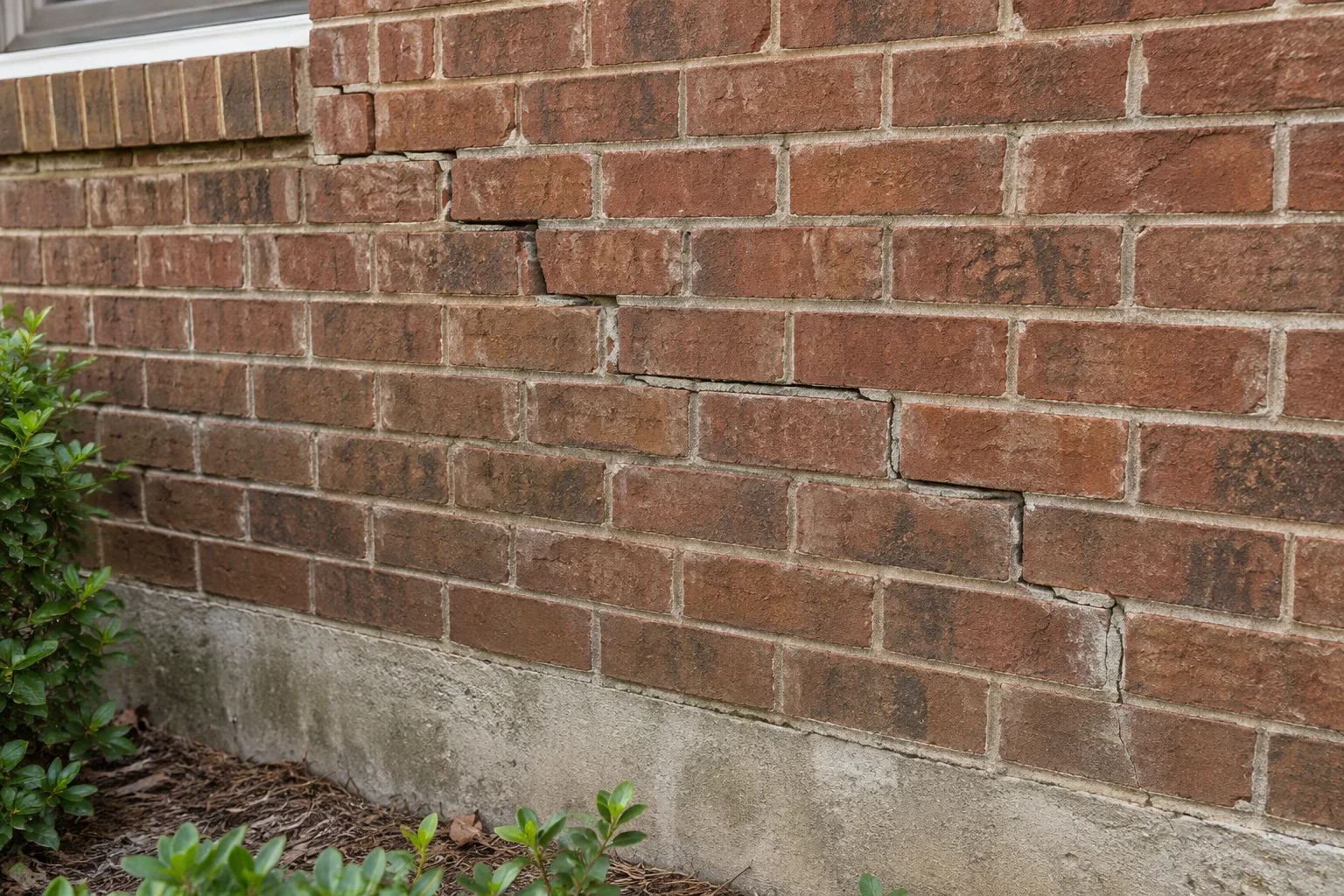
What does a horizontal crack in a basement wall actually mean?
A horizontal crack can be associated with lateral pressure, wall movement, curing, construction, or another condition. It deserves documentation and often prompt professional review, especially with displacement, bowing, water entry, or change over time. The pattern alone is not a complete diagnosis.
Block and poured-concrete walls carry different loads and respond to site conditions in different ways. Wall type, backfill, drainage, grade, groundwater, and observed movement should be considered together.
A crack may accompany bowing, but only measurements establish wall deflection. See bowing wall repair for questions about documenting movement and water conditions.
Horizontal, vertical, and diagonal patterns can each have multiple causes. See other foundation crack types, but ask a qualified professional to connect any recommendation to evidence.
What construction and site context may matter for horizontal cracks?
Many Cobb County homes have masonry or poured-concrete basements, but age, wall type, backfill, drainage, grading, and construction history vary. Regional soil information is context only; it does not establish why a particular wall cracked.
Seasonal rain may expose water-entry or movement changes, but ZIP code and month do not diagnose cause. The USDA Official Series Description for Cecil classifies mapped Cecil soils as low shrink-swell; that regional map is not a diagnosis. Consider fill, drainage, grading, foundation type, and settlement history.
Masonry joints and poured concrete can show different crack patterns, but construction details and loading matter. Request measurements rather than treating a typical pattern as proof of failure.
Heavy rain can affect water pressure where drainage and grading permit accumulation. See how spring rain creates hydrostatic pressure for observation questions, not a property diagnosis.
How do I know if my horizontal crack is serious enough to act on now?
Document visible bowing, displacement, water entry, widening or an offset wall and seek qualified review when present. A threshold used in one assessment does not select a method or establish urgency for every property.
A straightedge or other observation can document an apparent curve, but it cannot determine cause or urgency by itself. Avoid repair decisions based solely on a field test; request measurements and written rationale.
Sticking openings, diagonal drywall cracks or water along a crack may have multiple causes. Record them as companion observations without treating them as proof of movement.
Carbon-fiber straps, steel beams, anchors, drainage and other methods may be discussed for different conditions. Ask for measured deflection, wall type, load path, alternatives and scope. A on-site inspection may help if available; confirm terms directly.
- Visible bow or curve — keep clear if safety is uncertain and seek prompt review
- Horizontal crack location — document it; location alone does not rank risk
- Width or offset change — record measurements and request qualified assessment
- Shear displacement — avoid the area if unstable and seek appropriate help
- Water entry — document path and investigate safety and source
- Change since a prior observation — useful context, not proof of a mechanism
What options may be discussed for a bowing wall with a horizontal crack?
Sealing a crack may address water entry but may not restrain wall movement. Stabilization, drainage, repair, or monitoring depends on measured movement, wall type, water path, and site conditions. Request a written scope and alternatives rather than assuming one method.
Published ranges for straps are rough budgeting context only. Any count, spacing, method, and price should be tied to wall measurements and written terms. See carbon-fiber versus steel I-beams.
Steel beams, anchors, and other methods may be discussed for more substantial movement, but severity cannot be assigned from a crack pattern alone. Ask how drainage, grading, and structural evidence affect the recommendation.
Water management may be relevant where water entry is documented, but no system is always required. See basement waterproofing and ask the contractor to identify the observed path and scope.
How much does horizontal crack and bowing wall repair cost in Marietta?
Published ranges for crack repair, wall stabilization, and waterproofing are rough budgeting context only. Total cost depends on measurements, wall length and type, access, drainage, quantities, and written scope. See the <a href="/bowing-wall-repair">bowing wall repair</a> page or <a href="/foundation-cost-estimator">foundation cost estimator</a> for planning questions.
Cost depends on the supported design, measured conditions, access, quantities, and included work. Crack direction alone cannot establish price or urgency. Request a written scope, and seek prompt qualified help for observed hazards or concerning changes rather than relying on a price guide.
Waterproofing costs vary with perimeter, access, discharge, and system. A combined project should be priced from a written scope; do not infer a total from a regional range. These figures are rough budgeting context, not verified Cobb County price data or a contractor quote.
The bowing wall repair page outlines method and scope questions. The static foundation-cost planning guide supplies rough context, not a personalized estimate or an assessment booking.
What can sealing or patching a horizontal crack address?
Sealants and hydraulic cement may address limited water entry, but they do not automatically restrain a moving wall. Ask what evidence supports monitoring, sealing, stabilization, or drainage and what limitations apply.
A sealed crack may reopen if movement continues, but progression cannot be predicted from a pattern alone. Document width, displacement, water entry and change over time and request qualified review.
Interior coatings or sealants may address some moisture conditions but do not automatically restrain a moving wall. Ask how water control and structural work relate to the observed condition and what limitations apply.
Injection may fit some nonstructural water-sealing purposes, while a moving wall may prompt discussion of stabilization or another scope. Do not infer a method from crack direction alone; compare alternatives, design basis and written terms.
How does the on-site inspection work and what does it cost?
If an introduction is available, confirm the contractor’s assessment fee, timing, scope, and availability directly. A horizontal crack with displacement, water entry, or a visible bow deserves prompt attention, but measurements should precede a recommendation.
Regional Cecil and rainfall context cannot predict a particular wall’s movement. The USDA description classifies mapped Cecil soils as low shrink-swell; fill, drainage, grading, wall type, and settlement history vary. Request measurements rather than a forecast.
A home-inspection report may prompt questions from a buyer or lender, but no response is guaranteed. Obtain written scope, price, and warranty terms directly and seek transaction advice as needed.
A contractor may recommend monitoring or work based on measurements. Compare alternatives, exclusions, fee, schedule, and warranty in writing before deciding; there is no obligation to hire.
When is the right time to get a horizontal crack evaluated — and can I wait?
We are not a contractor. This disclosed referral service, operated by Stratum Relay LLC, may check whether a suitable contractor is available in the listed communities. Availability and credentials are not guaranteed. Verify identity, license, insurance, assessment fee, scope, schedule, price, and warranty directly; the referral request has no fee from this service.
When you call or submit a request, we may check coverage for your address. We do not promise an introduction, assessment, timing or repair. Any contractor terms are confirmed directly.
If you are in a home sale or purchase, a crack report may create questions for the parties, lender or insurer. Obtain transaction-specific advice and written scope, price and warranty terms directly; no response is guaranteed.
There is no obligation to hire attached to a contractor assessment. If measurements support monitoring or work, request benchmarks, alternatives and limitations in writing.
Frequently asked questions
Is a horizontal crack in a block wall always a sign of bowing?
Not always. A horizontal crack may have lateral-pressure, construction, material or other causes; measurements establish wall deflection and help assess urgency. Request prompt review when there is displacement, bowing or water entry.
Can a horizontal crack appear in a poured-concrete wall too?
Yes, a poured-concrete wall can develop a horizontal crack, but wall type and pattern alone do not establish cause. Ask the contractor to connect any stabilization or drainage scope to observed measurements and evidence.
How many carbon-fiber straps does a typical bowing wall need?
Strap count and spacing depend on wall length, deflection, wall type, and design. Published per-strap and total ranges are rough budgeting context only, not a quote. Request a written scope.
Does homeowners insurance cover horizontal crack repair in Georgia?
Insurance coverage depends on the policy, event, exclusions, and documented cause. Do not assume gradual movement or a regional soil explanation determines coverage; ask your carrier and review the policy.
Who actually does the repair work — is Marietta Foundation Repair a contractor?
Marietta Foundation Repair is not a contractor. It is a disclosed referral service operated by Stratum Relay LLC. If a suitable contractor is available, an introduction may be arranged; verify identity, license, insurance, fee, scope, and availability directly. The referral request has no fee from this service.
What ZIP codes and areas do you serve for horizontal crack inspections?
We may check whether a suitable contractor is available in the listed communities, but coverage and timing are not guaranteed. Confirm availability, identity, license, insurance, fee, scope, and schedule directly.