Basement Waterproofing & Drainage in Marietta, GA
Take the next step for your home
Tell us your concern. We'll check local contractor availability.
No referral fee · No obligation to hire
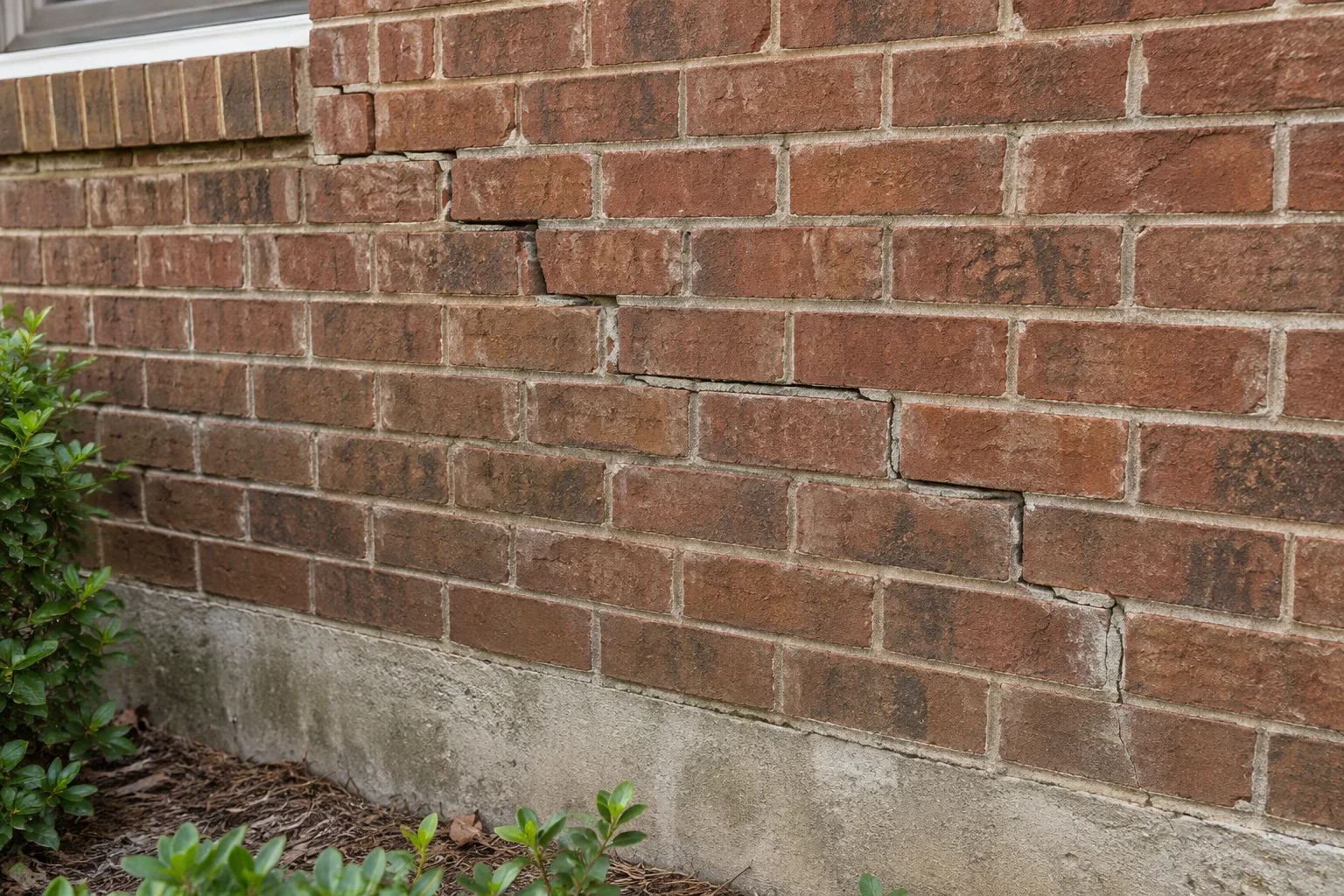
Do I need basement waterproofing in Marietta, GA?
Seepage, efflorescence, musty smells, or pooling water warrant documenting the entry path and site conditions; they do not automatically select waterproofing. Rainfall, grading, gutters, drainage, wall condition, and foundation type vary by property. If a suitable contractor is available, confirm assessment terms directly before scheduling.
Marietta Foundation Repair is a disclosed lead-referral service, not a contractor. If an introduction is available, a suitable contractor may assess basement moisture, drainage, and related foundation concerns. The referral request has no fee from us; any contractor assessment fee and scope are confirmed directly.
Water is not always a standalone problem. Regional soil and weather can provide context, but drainage, grading, utilities, wall condition, and site details vary. Addressing an observed water path may be considered before or alongside foundation repair; a contractor should explain the evidence.
If moisture and wall movement appear together, a suitable contractor may discuss both during an agreed assessment. The referral service does not promise a single visit, diagnosis, scope, or contractor.
What is the difference between interior and exterior basement waterproofing?
Interior and exterior systems address different observed water paths and have different access, disruption, discharge, and maintenance requirements. An interior collection system may route captured water to a sump or other discharge; exterior excavation and membranes may be considered for conditions at the outside wall. Neither guarantees that all water is removed, and a property's evidence is needed before deciding whether either or both scopes fit.
A provider may discuss an interior drain, sump, wall treatment, or another collection design when the observed entry path and access support it. Ask what water is being collected, where it will discharge, how power and maintenance are handled, and whether the proposed treatment addresses the source or only manages entry.
Exterior work may involve excavation, a membrane, footing drainage, grading, or another component when site access and the documented water path justify it. It can be disruptive and does not guarantee that every source of moisture will be addressed; ask for the limits, restoration, and exclusions in writing.
Basement construction, wall condition, grades, drainage, access, and water paths vary among properties. A provider should compare interior, exterior, surface, crack, and monitoring options for the observed condition rather than infer a system from house age or neighborhood.
How does a French drain and sump pump system work?
A French drain or similar collection system may collect water where its layout, grade, and discharge design fit the observed path; a sump may then move collected water to an approved discharge point. Ask how the proposed system handles hydrostatic pressure, power loss, maintenance, and conditions outside its scope.
Rainfall and mapped soil are regional context, not proof of a particular water path. A provider may investigate roof runoff, grade, groundwater, joints, cracks, plumbing, and wall condition before discussing collection or exterior work.
A contractor may discuss a battery-backup sump system where site conditions and the proposed design support it. Ask about discharge routing, power, maintenance, and warranty; this service does not promise equipment or performance.
When water enters through a particular crack, a provider may discuss crack treatment separately from collection or drainage. Ask which condition each scope addresses and whether one depends on the other; no bundled result is guaranteed.
How can water intrusion relate to foundation concerns in Cobb County?
Water intrusion is often shaped by grading, gutters, downspouts, soil, wall condition, plumbing, and foundation type. Mapped soil information can provide context, but it does not identify the cause at one basement. A contractor should trace the water path and explain whether surface drainage, interior collection, exterior work, crack sealing, or structural repair is warranted.
Start with the path water takes: roof runoff, yard grade, wall cracks, joints, plumbing, or groundwater. A contractor can review those conditions and explain whether a surface correction may help before an interior or exterior system is considered.
Trees, drainage and moisture may be relevant to an investigation, but cracks, sticking openings and floor changes do not identify a single cause. Ask what property-specific evidence supports any explanation.
Water management and structural support address different questions. Helical underpinning should not be added to a drainage project merely because the property has cracks.
Can fixing gutters and grading stop my basement leak?
Surface-water maintenance may help some leaks, but the source must be investigated. Gutters and grading do not address every plumbing, groundwater, wall or joint problem. Ask how a proposed correction relates to the observed water path.
Ask whether roof drainage, downspout discharge, grade and visible entry paths have been considered before selecting an interior or exterior system. Safe discharge, utilities and neighboring properties matter.
A storm can reveal a water-entry issue, but rainfall alone does not prove clay swelling, footing movement or which repair is needed.
If an assessment is available, ask the contractor to review gutters, downspouts, yard grade, and entry paths. A surface correction may or may not address the observed problem; request the evidence and written scope before paying for a system.
How much does basement waterproofing cost in Marietta?
Waterproofing cost depends on the entry point, footprint, access, drainage work, excavation, sump equipment, and any structural repair. Published ranges are rough budgeting context, not verified Cobb County price data or a contractor quote. Confirm the contractor assessment fee, written scope, and final price directly.
Because every basement and soil grade is different, a contractor may price waterproofing after reviewing the property rather than over the phone. A simple interior drain and sump system, exterior excavation, or another scope can vary substantially. Published figures are rough budgeting context, not verified Cobb County price data or a contractor quote.
Established ranges for related work give you a frame of reference: crack injection runs $500 to $3,000 for sealing specific leaks with epoxy or polyurethane, and complete foundation repair projects run $3,500 to $25,000 when structural stabilization is bundled in. These figures are rough budgeting context, not verified Cobb County price data or a contractor quote.
Before accepting an assessment, ask what it includes, whether it produces a written proposal, and what it costs. We do not charge to submit a referral request; a contractor's inspection, engineering and repair fees are separate. An introduction or estimate is not guaranteed.
What waterproofing materials and methods will the contractor use?
Possible materials include injection resins, drainage components, moisture barriers and exterior coatings. Their uses differ. Ask which material is proposed, why it suits the observed conditions, and what its limitations and installation requirements are.
Polyurethane or epoxy injection may be considered for some cracks, and drainage or moisture-control systems may address other conditions. Ask why the proposed material or system suits the observed crack, movement and water path. A referral does not establish a contractor's methods or guarantee that a particular treatment is appropriate.
On the structural side, a contractor may discuss galvanized steel helical piers or another stabilization method if evidence supports it. Compare separate scopes and verify credentials, fees, and warranty terms directly rather than assuming one contractor handles every need.
Foundation type, construction details, access and the observed condition affect a proposal. Ask which code provisions, product instructions and design requirements apply to the actual scope; a soil label or house age does not establish the repair needed.
Basement waterproofing in East Cobb, GA
Basement waterproofing is not a single guaranteed remedy. If an introduction is available, a contractor may inspect drainage, water paths, walls, and foundation details and provide a written scope. Confirm assessment fee, credentials, scope, and schedule directly. The referral request has no fee from this service.
Cobb County includes varied soil units, drainage patterns, grades, foundation types, and construction histories. Water entry can involve surface runoff, groundwater, plumbing, wall cracks, or joints; a contractor should trace the path rather than assume a regional cause.
Interior drainage, sump equipment, grading, downspout work or exterior excavation can address different water paths. Ask a contractor what observations support the proposed approach, what is excluded and what further investigation may be needed.
Because water intrusion and structural movement can coexist, a contractor may discuss foundation repair in East Cobb if site evidence supports it. For pricing context, the basement waterproofing cost guide covers scope variables. The referral request has no fee from us; any contractor assessment fee is confirmed directly. Related guide: learn more.
Frequently asked questions
Does Marietta Foundation Repair do the waterproofing work itself?
No. Marietta Foundation Repair is a disclosed lead-referral and marketing service, not a contractor. If a suitable contractor is available, we may introduce you; verify that contractor’s identity, license, insurance, scope, and fees directly. The referral request has no fee from this service.
What should I confirm before scheduling an inspection?
Any contractor assessment fee, scope, and availability are confirmed directly with the contractor. If you choose to hire, you contract and pay that contractor directly for the agreed work.
Which Cobb County areas do you serve for waterproofing?
Marietta Foundation Repair is a referral service. If an introduction is available, a local contractor may handle waterproofing, drainage, and related foundation work across the service area. Confirm availability, scope, schedule, and any assessment fee directly.
Will waterproofing alone fix my foundation cracks?
Sometimes. If water intrusion is the only observed issue, drainage or sealing may be discussed. Other movement may need separate structural evaluation. Site conditions vary, so the appropriate scope is determined from evidence rather than a regional soil label.
How fast can someone look at my basement seepage?
Submit a referral request and we may check whether a suitable contractor is available. Any site visit, assessment fee, scope, schedule, and availability are confirmed directly; seasonal demand does not create a guaranteed appointment.
Does a sump pump need a backup during Georgia storms?
A battery backup may be discussed where power loss and sump operation create a site-specific concern. Ask the contractor about capacity, discharge, maintenance, and warranty; no equipment or dry-basement outcome is guaranteed.