Foundation Crack Repair in Marietta & Cobb County, GA
Take the next step for your home
Tell us your concern. We'll check local contractor availability.
No referral fee · No obligation to hire
How do I request foundation crack help?
Tell us where the crack is, what it looks like, whether it is widening or leaking, and what else changed. We may check whether a suitable contractor is available; any contractor visit, fee, diagnosis, quote, or repair is arranged directly and is not guaranteed by this referral service.
We do not inspect or repair foundations. Before accepting a contractor visit, ask who will attend, what will be measured, whether a fee applies, whether a written scope is included, and whether the visit is a sales estimate or an independent engineering evaluation.
Photograph the crack with a ruler or coin for scale, mark the ends with a date, and record nearby drainage, water entry, sticking doors, floor changes, or displacement.
What can crack direction tell me—and what can it not tell me?
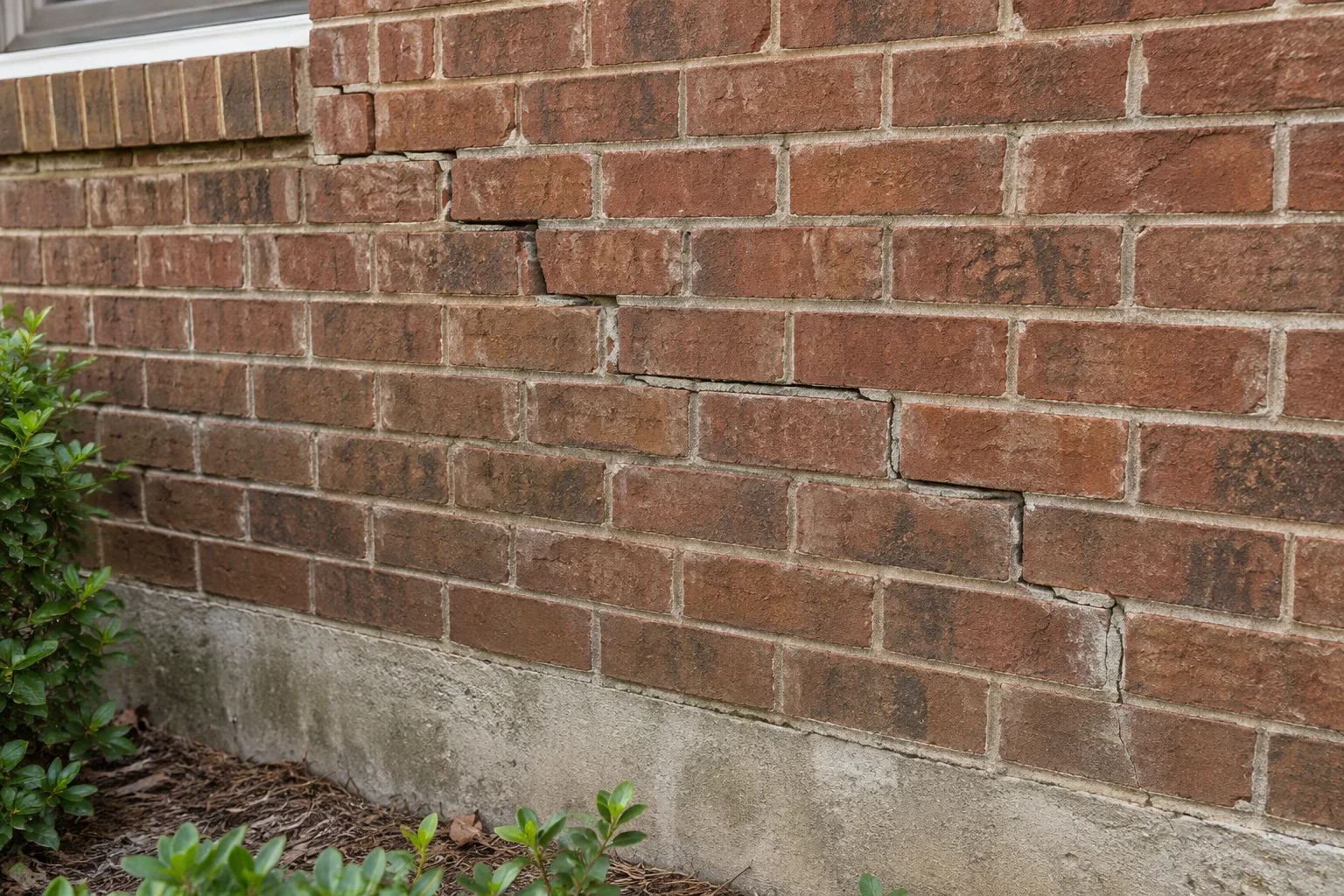
Vertical, diagonal, stair-step, and horizontal patterns can help organize questions, but none diagnoses a property remotely. A stair-step crack may reflect differential movement; a horizontal wall crack may indicate lateral pressure. Width, displacement, change over time, foundation type, drainage, fill, and other evidence matter.
Do not treat a stair-step crack as proof that piers are needed. Ask what was measured, what alternatives were considered, and whether monitoring, drainage correction, crack repair, or structural support fits the evidence.
A rapidly widening crack, visible displacement, a leaning wall, sudden floor change, or water intrusion deserves prompt professional attention. If there is an immediate life-safety concern, leave the area and contact appropriate emergency help.
What does USDA's Cecil description mean for a crack?
Regional soil names do not establish the conditions below one home. The USDA Official Series Description classifies mapped Cecil soils as low shrink-swell; fill, drainage, grading, other mapped units, settlement history, and foundation construction can produce different crack causes and repair needs.
Read the USDA Official Series Description for Cecil before relying on generalized percentage or national-movement claims. The description is regional soil evidence, not a field report for an individual Cobb County lot.
Ask the contractor to separate soil-map context from site observations. A professional may need floor or wall measurements, drainage review, and an engineer or geotechnical opinion for a substantial structural proposal.
When is epoxy, polyurethane, or reinforcement considered?
Injection and wall reinforcement are different scopes. A provider may discuss epoxy, polyurethane, or another treatment after considering whether a particular crack is dry or wet, stable or changing, accessible, and compatible with the product and preparation requirements. Carbon-fiber or steel reinforcement may be considered for some wall conditions, but a crack pattern alone does not select a method or establish the needed performance.
Ask whether the crack is changing, whether water is present, and what site evidence supports the proposed treatment. An injection may seal or bond a selected crack, but it should not be assumed to stabilize an actively settling footing or wall; drainage, monitoring, engineering, or structural support may require a separate scope.
For post-tension slabs or concealed utilities, ask how the provider will locate and avoid cables and services, what preparation and installation limits apply, and what the written scope excludes.
What should I ask a crack-repair contractor?
Ask for the licensed identity, insurance, measurements, diagnosis, repair alternatives, itemized scope, warranty, schedule, payment terms, and change-order rules. Seek another written opinion for major structural work or when the recommendation is based only on a photograph.
Verify the actual licensed individual or qualifying agent in the Georgia Secretary of State license verification portal. Review the Georgia Attorney General's home repairs and improvements guidance for written contracts, insurance, and payment precautions.
Ask whether an engineer should review the proposed structural repair. A contractor sales assessment is not automatically an independent engineering report.
What does crack repair cost?
Existing ranges of roughly $300–$3,000 for crack injection are budgeting context only, not verified Cobb County price data or a quote. Length, access, preparation, water control, reinforcement, foundation type, and underlying movement can change the scope substantially.
Ask whether the price covers preparation, ports, sealing, drainage, monitoring, cleanup, warranty, and future movement. Confirm any assessment or engineering fee before scheduling.
The referral request has no fee from this service; contractor assessment, engineering, repair, and warranty terms are separate and confirmed directly.
Frequently asked questions
Is the crack-repair referral request free?
Yes. Marietta Foundation Repair does not charge homeowners to submit a referral request. Contractor availability, credentials, assessment fees, scope, schedule, and repair pricing must be confirmed directly; an introduction is not guaranteed.
Do stair-step cracks automatically mean I need piers?
No. They may indicate differential movement and deserve assessment when widening or displaced, but a crack pattern alone cannot establish cause or method. Ask for measurements, drainage and fill review, alternatives, and the evidence behind any pier recommendation.
Can crack injection fix settlement?
Injection may seal a suitable stable or leaking crack, but it does not necessarily stabilize an actively moving footing or wall. Ask what caused the crack, what evidence shows activity, and whether drainage, monitoring, engineering, or structural support is needed.
Is a contractor visit an engineer's report?
Not automatically. A contractor may provide observations and a repair estimate. Ask whether a Georgia-licensed professional engineer should independently evaluate or design a major structural repair.
What should I photograph before contacting anyone?
Photograph the full wall and close-up with a ruler or scale, mark the ends and date, and record water entry, displacement, door or floor changes, and drainage conditions. Do not widen or fill a structural crack yourself.
What do crack-repair ranges mean?
The roughly $300–$3,000 range is budgeting context only, not verified current Cobb County price data or a quote. Length, access, preparation, water control, reinforcement, and cause determine the contractor's actual scope and price.