Pier & Beam and Crawlspace Foundation Repair in Marietta, GA
Take the next step for your home
Tell us your concern. We'll check local contractor availability.
No referral fee · No obligation to hire
What is pier-and-beam foundation repair?
Pier-and-beam repair addresses a raised foundation where a house sits on piers and wood girders above a crawlspace. Possible work includes releveling, shimming, beam or joist repair, and moisture control, but the observed condition determines the scope. A referral service may check whether a suitable contractor is available; it does not diagnose or perform the work.
Pier-and-beam (also called raised or crawlspace foundation) construction supports your home on a grid of masonry or concrete piers topped by wood girders, with floor joists spanning between them. Unlike a poured slab, this system has an accessible crawlspace underneath, which makes repairs more direct but also exposes the wood framing to moisture, rot, and pest damage over time.
Raised-foundation and basement-plus-crawlspace construction can occur in the service area, but housing age or neighborhood does not establish the system or its condition. Marietta Foundation Repair is a referral service, not a contractor: if an introduction is available, a contractor may assess the actual home. The referral request has no fee from us. Confirm any contractor assessment fee directly.
If your home is a brick ranch on a poured slab instead, see our slab foundation repair page, or review the full menu on foundation repair. Foundation types have different construction and access questions, but the observed condition still has to be established at the property.
What are the signs of pier-and-beam foundation failure?
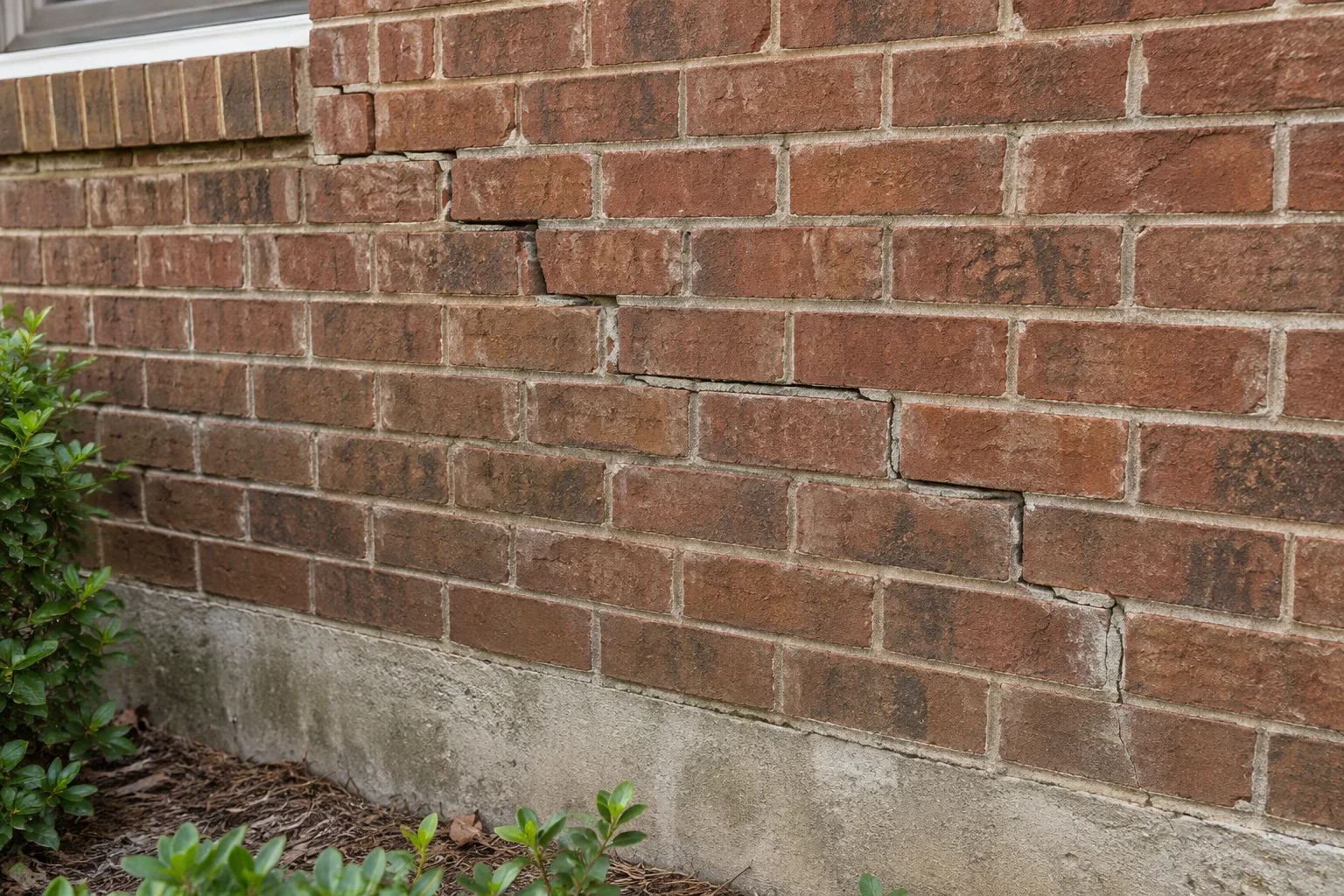
Bouncy, sagging, or sloping floors, sticking openings, trim gaps, drywall cracks, and crawlspace moisture are observations that may warrant an assessment. They can relate to supports, framing, moisture, drainage, finishes, or other conditions; none alone identifies a settled pier, weakened joist, or required repair.
Raised-foundation symptoms can appear in the floor system, walls, openings, or crawlspace. Document what changed, where it changed, and whether water or visible damage is present. A provider should inspect supports, framing, elevations, and site conditions rather than infer one cause from a symptom.
These symptoms can reflect settled piers, sagging girders, weakened joists, moisture, drainage, or other conditions. Soil moisture may change the timing of symptoms, but a crawlspace inspection should examine the framing, supports, elevations, and water path rather than assume one cause. A damp crawlspace can soften wood even when the piers are sound.
Persistent moisture or standing water deserves attention, but does not predict whether shimming, framing work or another repair is needed. The assessment guide helps you ask about access, scope, fees and findings.
What approaches may be considered for bouncy or sloping crawlspace floors?
Possible work for a crawlspace floor may include support adjustment, new or repaired footings, shimming, beam or joist reinforcement, replacement of damaged members, or moisture-related work. Which, if any, is appropriate depends on measured conditions, the support design, access, and the provider's stated lift limits. Lifting can affect finishes and plumbing, so risks and exclusions should be explained before work.
A provider may measure elevations, inspect piers, footings, beams, joists, moisture, and access before discussing whether any lifting or support adjustment is appropriate. Ask what evidence supports the proposed scope, who designs it, and what movement or lift limits apply.
Possible approaches include repairing or adding a footing, adjusting a support, shimming where the bearing condition and design permit, or reinforcing or replacing framing. These are examples of scopes, not a prescribed sequence or promise that a particular method restores level or stiffness.
Any proposed lifting should address sequencing, monitoring, finish and plumbing risk, allowable limits, and what remains outside the scope. Ask whether an appropriately licensed professional should review a substantial structural proposal; this referral service does not determine compliance or perform the work.
What are sister beams, joist repair, and shimming?
Shimming, beam or joist reinforcement, and member replacement are possible scopes for different observed conditions. Shims can address a bearing-height issue only when the support, materials, load path, and design make that appropriate; framing work addresses different concerns. The assessment and written scope should explain the evidence, limits, and exclusions.
A provider may discuss reinforcing or replacing a girder or joist when inspection documents damage, inadequate support, or another framing condition. Ask what was observed, what design or load information was used, and whether the original member remains in the scope.
Shimming concerns bearing height, not every strength or moisture problem. The suitable material, bearing condition, preparation, and load transfer need to be evaluated; do not assume that a generic steel, treated-wood, or improvised shim is suitable or durable.
The extent of work can range from a localized support or framing scope to several separate conditions, but a label such as "severe" does not establish what is needed. Published dollar figures are rough budgeting context, not verified Cobb County prices; confirm quantities, assessment fees, and exclusions directly.
Why does my crawlspace stay wet, and how is moisture controlled?
A crawlspace can receive moisture from the ground, rain entry, drainage, outdoor air, plumbing, condensation, or another source. A site-specific assessment may consider a ground vapor barrier, drainage, sump equipment, ventilation or air-sealing changes, and dehumidification, but no one component is a universal fix or proof that framing is protected.
Regional rainfall is context, not a diagnosis of one crawlspace. Gutters, downspouts, grading, vents, plumbing, groundwater, condensation, and framing condition can all be relevant. Ask the provider to trace the observed water or humidity path and distinguish moisture-control work from support or framing work.
A ground vapor barrier may be considered where ground moisture is documented; drainage, a sump, ventilation changes, or dehumidification may address other measured conditions. The proposed components, seams, penetrations, discharge, maintenance, and performance checks should be stated in writing rather than presented as a core fix for every crawlspace.
Moisture control and structural support are separate questions. If floors, piers, beams, or joists show changes, ask for a framing and support assessment in addition to any moisture scope. Related basement waterproofing questions should likewise follow the observed water path.
How much does pier-and-beam foundation repair cost in Cobb County?
Pier-and-beam work can range from a limited support repair to substantial framing and foundation work. Published dollar figures here are illustrative budgets, not verified Cobb County prices. The appropriate scope, assessment fees and any proposal must be confirmed with a contractor; a visit does not guarantee an exact final cost.
Cost scales with how much of the floor system is affected. A localized fix - shimming a settled pier, adding a vapor barrier, and correcting one downspout - lands near the bottom of the $3,500 to $25,000 range. Extensive work involving full releveling, multiple sister beams, joist replacement, and several new footings sits higher. These figures are rough budgeting context, not verified Cobb County price data or a contractor quote.
If deep support is proposed, ask what investigation and design justify the method and count. The helical pier guide explains a manufacturer example. Framing, crack treatment and underpinning have different scopes; confirm fees and proposals directly.
Any contractor assessment fee, scope, and schedule are confirmed directly. The referral request has no fee from this service, and you decide whether to authorize work after reviewing the written scope and price.
Where might pier-and-beam or crawlspace homes occur in Cobb County?
Pier-and-beam and basement-plus-crawlspace construction can occur in multiple Cobb County communities, but no neighborhood ranking establishes how many homes have it or what condition they are in. Identify the actual foundation, access, framing, moisture, and support conditions before discussing work.
Foundation construction varies within each neighborhood and housing era. Identify the actual system and condition rather than assuming that a subdivision's age explains floor symptoms.
Ask about assessment of piers, beams, joists, drainage and moisture, including access and limitations. We may check contractor availability, but do not guarantee an introduction, credentials or a repair recommendation.
Frequently asked questions
Is pier-and-beam repair better than slab repair?
Neither is inherently better; they concern different foundation components. Framing repairs, slab work or deeper support may fit different conditions. Ask what observations and design support the proposed method, and confirm assessment scope, fees and limitations directly.
Can I stay in my home during pier-and-beam releveling?
Occupancy and access restrictions depend on the condition and proposed work. Do not assume a home is safe to occupy during lifting or structural repair. Ask the responsible professional for project-specific restrictions and emergency precautions before work starts.
How long does a vapor barrier last in a Marietta crawlspace?
A liner's service life depends on its material, installation, exposure, penetrations, traffic, maintenance, and any later work; no universal lifespan can be promised. Ask the provider what product and installation requirements apply, how damage will be repaired, and what inspection or maintenance the written terms require. A liner alone does not establish that a crawlspace will remain dry.
Why do my floors bounce more in some seasons?
Cobb County soil and crawlspace moisture can affect supports differently from lot to lot. Symptoms such as bouncy floors may reflect settled piers, beams, joists, drainage, or other conditions. The appropriate repair requires inspection and measurements; releveling or shimming is not automatic.
Does Marietta Foundation Repair do the work itself?
No. Marietta Foundation Repair is a disclosed referral service, not a contractor. We may check whether a suitable contractor is available; verify identity, license, insurance, assessment fee, scope, and schedule directly. The referral request has no fee from this service, and any contractor may separately charge for assessment or work.
What should I confirm before scheduling an inspection?
Any contractor assessment fee, scope, and availability are confirmed directly with the contractor. If an introduction is available, ask the contractor to inspect piers, beams, joists, and crawlspace moisture, then review the written scope and price. These figures are rough budgeting context, not verified Cobb County price data or a contractor quote.